In Collaboration with
In Collaboration with
Second Helpings
Second Helpings
Chef For Grabs
Chef For Grabs
Chef For Grabs
Bridging Food Insecurity Through Technology
Overview
Overview
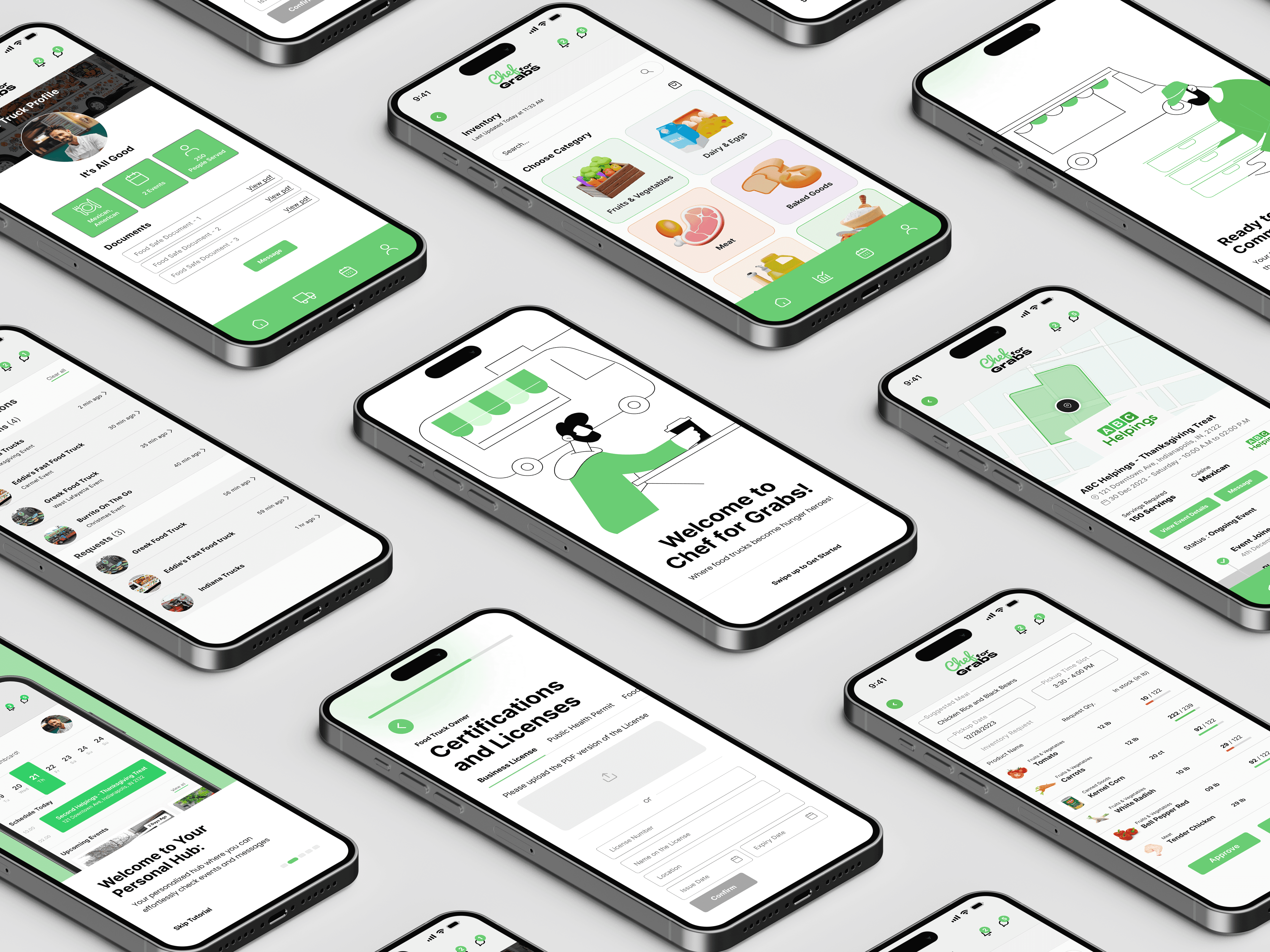
Food insecurity affects one in eight Americans, with 25% of Marion County residents depending on food assistance programs. Indianapolis-based organization Second Helpings has contributed significantly to food rescue, yet struggles with logistical challenges and resource shortages in food delivery to the needy. This project aims to develop an application called Chef For Grabs, connecting food truck chefs and food rescue organizations to streamline food distribution and provide wholesome meals to food-insecure communities.
Timeline: Oct-Dec 2023
Timeline: Oct-Dec 2023
Role: User Research, Prototyping, Usability Testing
Role: User Research, Prototyping, Usability Testing
Use Case: Food Insecurity Solutions in Indianapolis
Use Case: Food Insecurity Solutions in Indianapolis
Defining Product Vision
Defining Product Vision
The Challenge
The Challenge
The Challenge
The project's core goal is to address food insecurity by creating a platform that facilitates collaboration between food truck chefs and food rescue organizations. Through our research, we identified a lack of resources, particularly mobile kitchens and reliable transportation, as a primary barrier to delivering meals to communities in need. Chef For Grabs aims to bridge this gap, enabling efficient communication between food trucks and food rescue organizations for event planning, ingredient sourcing, and food distribution.
The project's core goal is to address food insecurity by creating a platform that facilitates collaboration between food truck chefs and food rescue organizations. Through our research, we identified a lack of resources, particularly mobile kitchens and reliable transportation, as a primary barrier to delivering meals to communities in need. Chef For Grabs aims to bridge this gap, enabling efficient communication between food trucks and food rescue organizations for event planning, ingredient sourcing, and food distribution.
The project's core goal is to address food insecurity by creating a platform that facilitates collaboration between food truck chefs and food rescue organizations. Through our research, we identified a lack of resources, particularly mobile kitchens and reliable transportation, as a primary barrier to delivering meals to communities in need. Chef For Grabs aims to bridge this gap, enabling efficient communication between food trucks and food rescue organizations for event planning, ingredient sourcing, and food distribution.
KPIs + Potential Impact
KPIs + Potential Impact
KPIs + Potential Impact
Event Attendance and Meal Distribution
Event Attendance and Meal Distribution
Track the number of attendees and meals distributed per event.
Track the number of attendees and meals distributed per event.
Engagement Rate of Chefs and Organizations
Engagement Rate of Chefs and Organizations
Measure chef participation in events and consistency over time.
Measure chef participation in events and consistency over time.
Community Satisfaction
Community Satisfaction
Gauge satisfaction through feedback from food-insecure communities on meal quality and frequency.
Gauge satisfaction through feedback from food-insecure communities on meal quality and frequency.
Social Media Reach and App Usage
Social Media Reach and App Usage
Monitor engagement and visibility via in-app social sharing.
Monitor engagement and visibility via in-app social sharing.
Value Proposition
Value Proposition
Value Proposition
What
What
A mobile app to streamline food distribution by connecting food trucks with food rescue organizations for efficient collaboration.
A mobile app to streamline food distribution by connecting food trucks with food rescue organizations for efficient collaboration.
Who
Who
Primarily for food trucks and food rescue organizations serving vulnerable populations in Indianapolis.
Primarily for food trucks and food rescue organizations serving vulnerable populations in Indianapolis.
When + Where
When + Where
The mobile application is to be used at shelters, events, and within communities.
The mobile application is to be used at shelters, events, and within communities.
Market Opportunity
Market Opportunity
Market Opportunity
146
146
Emergency Shelters With approximately 13% located near Indianapolis, highlighting the need for better food distribution.
Emergency Shelters With approximately 13% located near Indianapolis, highlighting the need for better food distribution.
160+
160+
Food Trucks, A vast pool of potential contributors for food rescue efforts in Indianapolis.
Food Trucks, A vast pool of potential contributors for food rescue efforts in Indianapolis.
25%
25%
Marion County residents rely on food assistance programs like SNAP, WIC, food pantries, and congregate meals.
Marion County residents rely on food assistance programs like SNAP, WIC, food pantries, and congregate meals.
User Research
User Research
Research Methods
Research Methods
Research Methods
Competitor Analysis
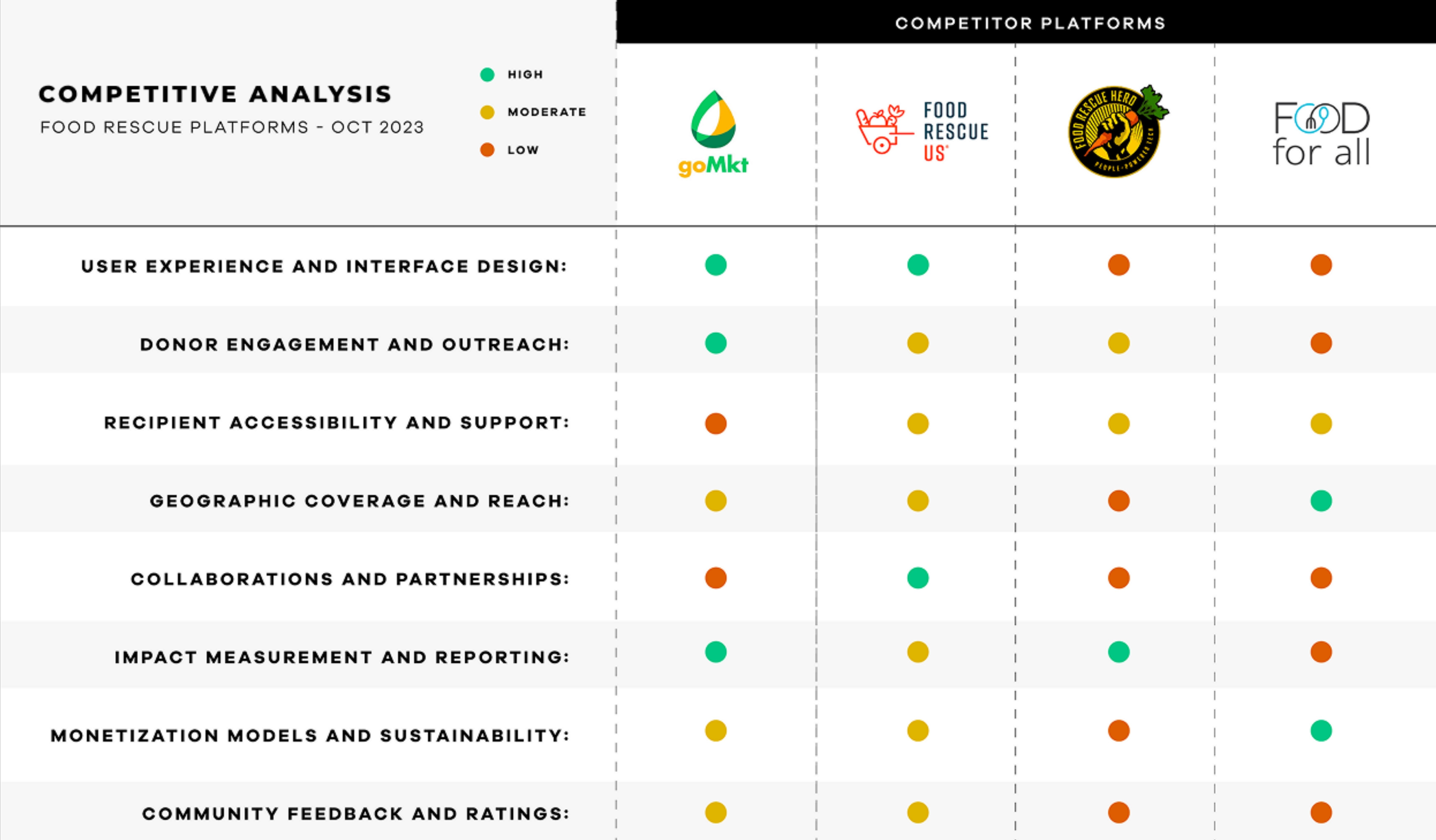
We evaluated existing food redistribution platforms to identify inefficiencies in logistics, compliance, and user engagement. By analyzing gaps in meal distribution and coordination, we developed a strategy that streamlined connections between food trucks and rescue organizations.
Competitor Analysis
We evaluated existing food redistribution platforms to identify inefficiencies in logistics, compliance, and user engagement. By analyzing gaps in meal distribution and coordination, we developed a strategy that streamlined connections between food trucks and rescue organizations.
Competitor Analysis
We evaluated existing food redistribution platforms to identify inefficiencies in logistics, compliance, and user engagement. By analyzing gaps in meal distribution and coordination, we developed a strategy that streamlined connections between food trucks and rescue organizations.
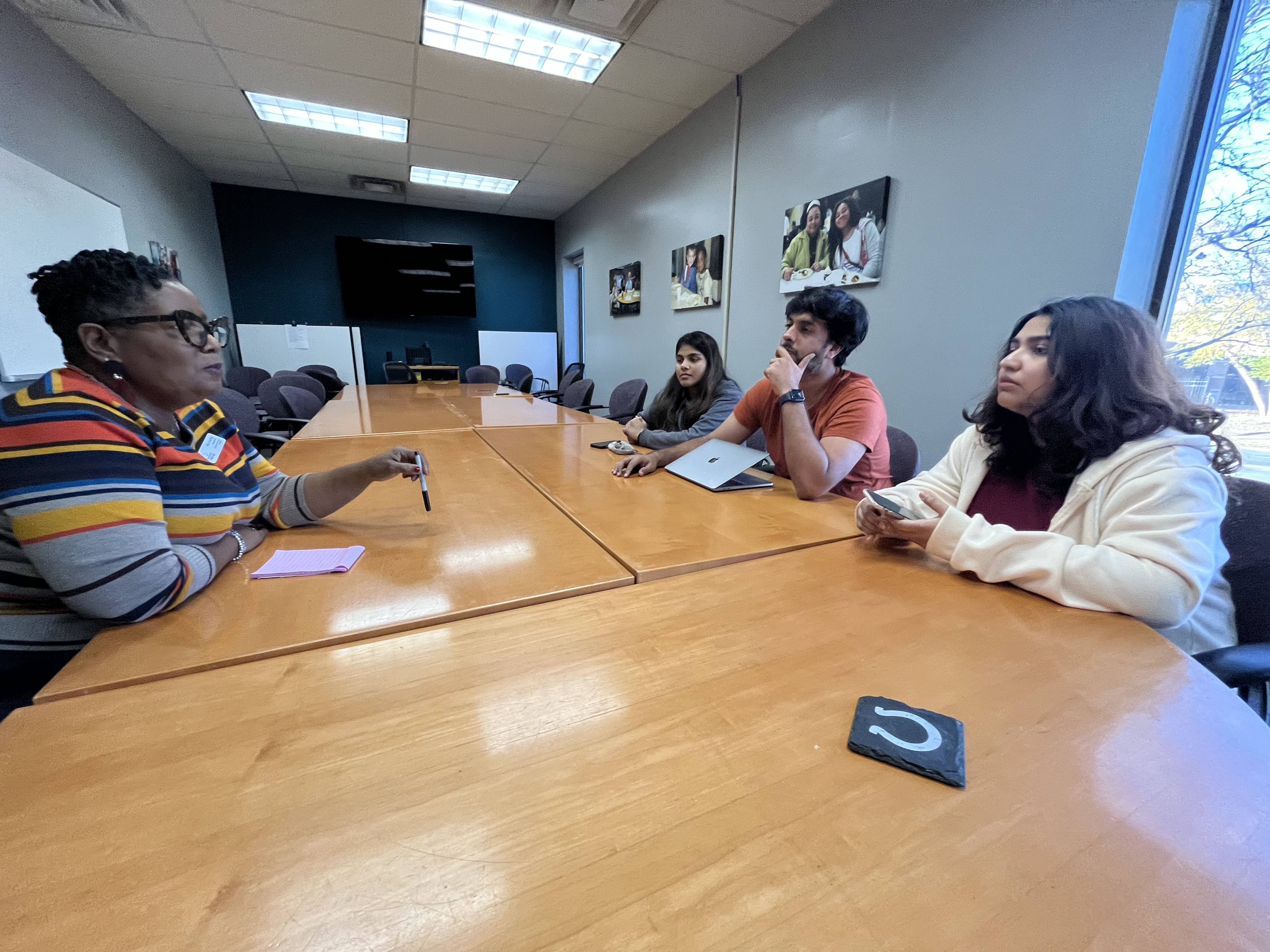
User Interviews
We conducted 8 interviews with food truck operators, restaurant chefs, and Second Helpings representatives. These discussions revealed challenges such as regulatory compliance, logistical inefficiencies, and excessive paperwork, helping us shape our platform’s priorities.
User Interviews
We conducted 8 interviews with food truck operators, restaurant chefs, and Second Helpings representatives. These discussions revealed challenges such as regulatory compliance, logistical inefficiencies, and excessive paperwork, helping us shape our platform’s priorities.
User Interviews
We conducted 8 interviews with food truck operators, restaurant chefs, and Second Helpings representatives. These discussions revealed challenges such as regulatory compliance, logistical inefficiencies, and excessive paperwork, helping us shape our platform’s priorities.
Brainstorming Sessions
We explored ways to simplify food donation by addressing compliance barriers, transport limitations, and logistical inefficiencies. These discussions informed key platform features, such as automated documentation and real-time coordination, to reduce administrative burdens and enhance efficiency.
Brainstorming Sessions
We explored ways to simplify food donation by addressing compliance barriers, transport limitations, and logistical inefficiencies. These discussions informed key platform features, such as automated documentation and real-time coordination, to reduce administrative burdens and enhance efficiency.
Brainstorming Sessions
We explored ways to simplify food donation by addressing compliance barriers, transport limitations, and logistical inefficiencies. These discussions informed key platform features, such as automated documentation and real-time coordination, to reduce administrative burdens and enhance efficiency.
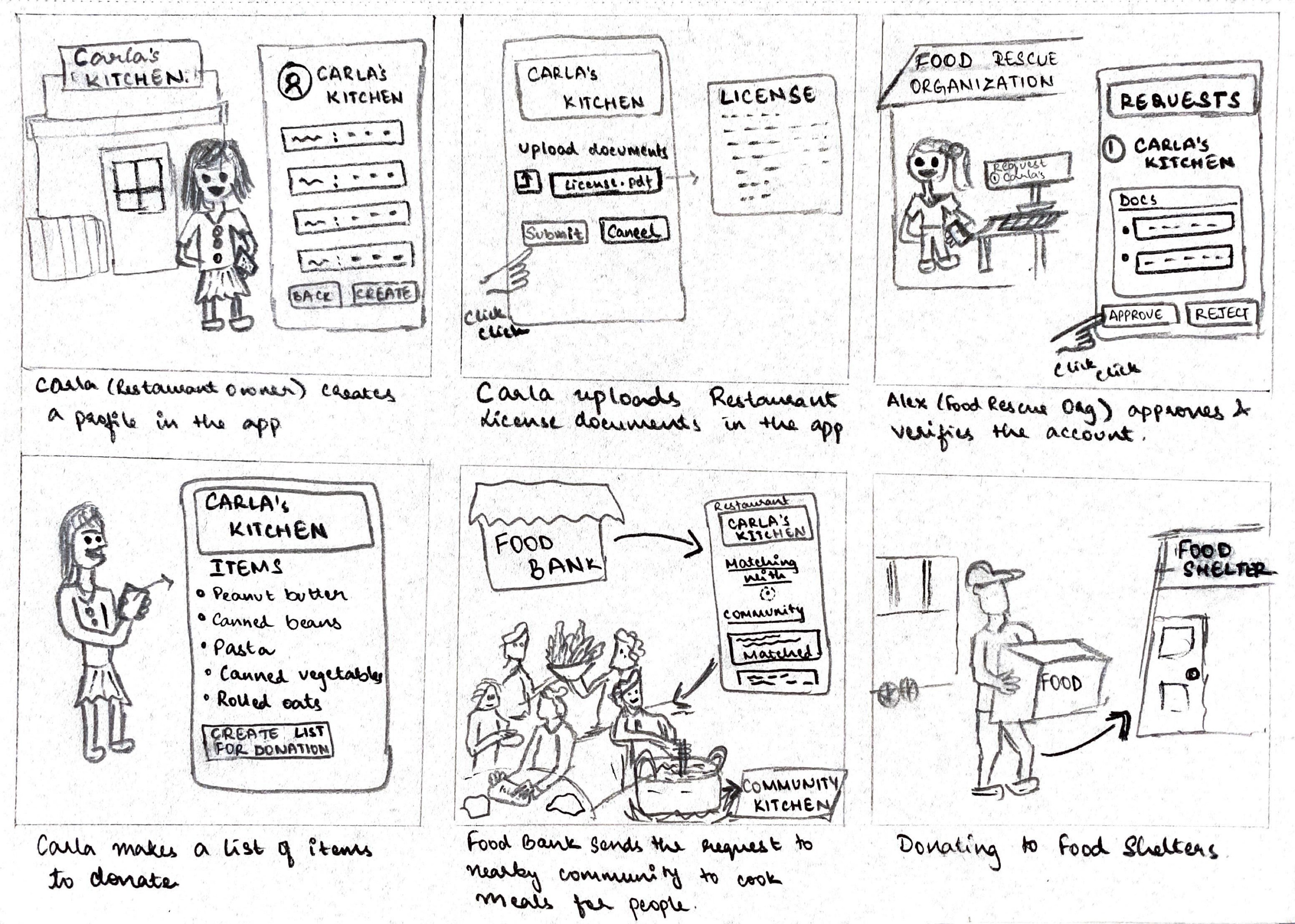
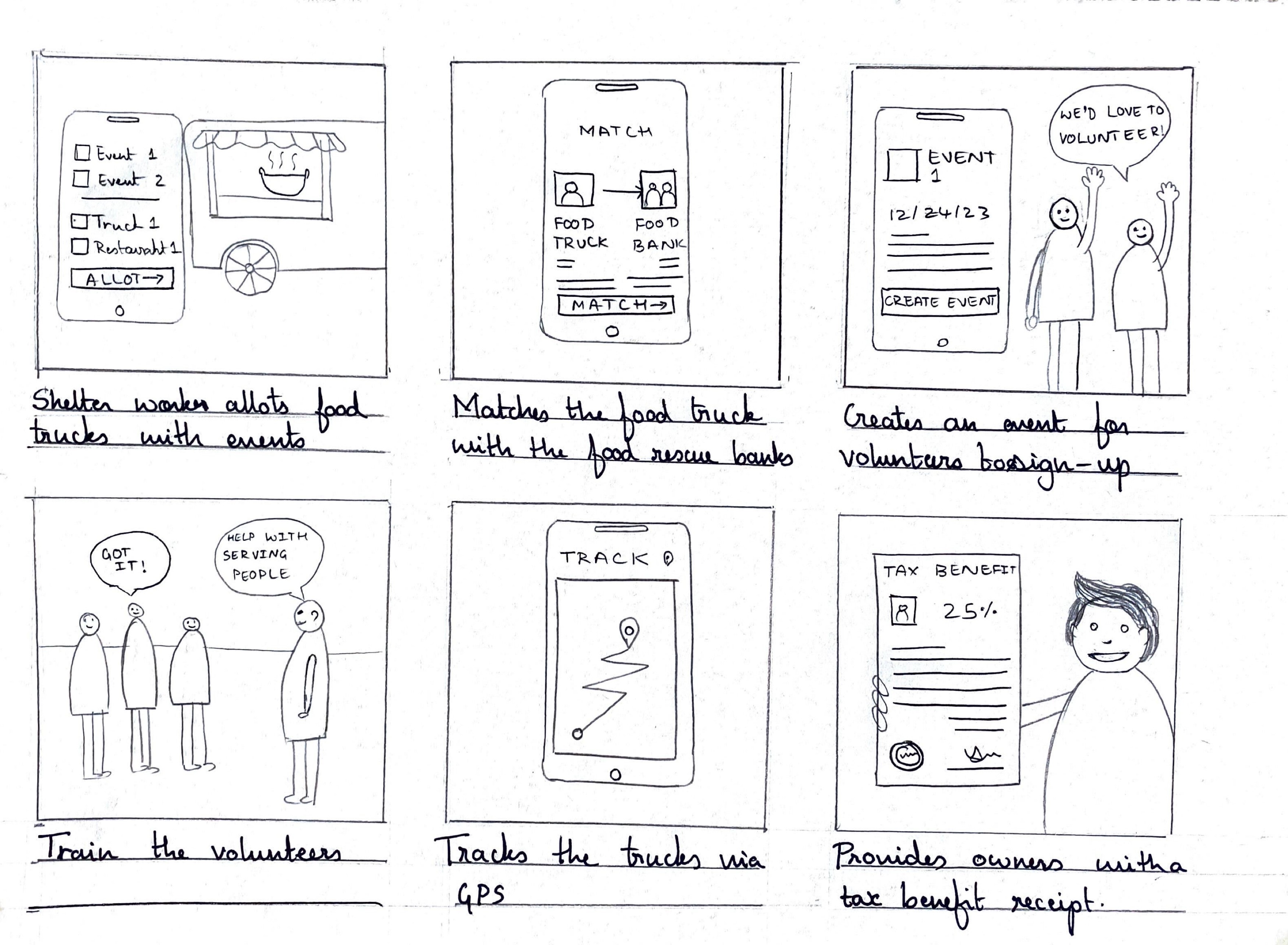
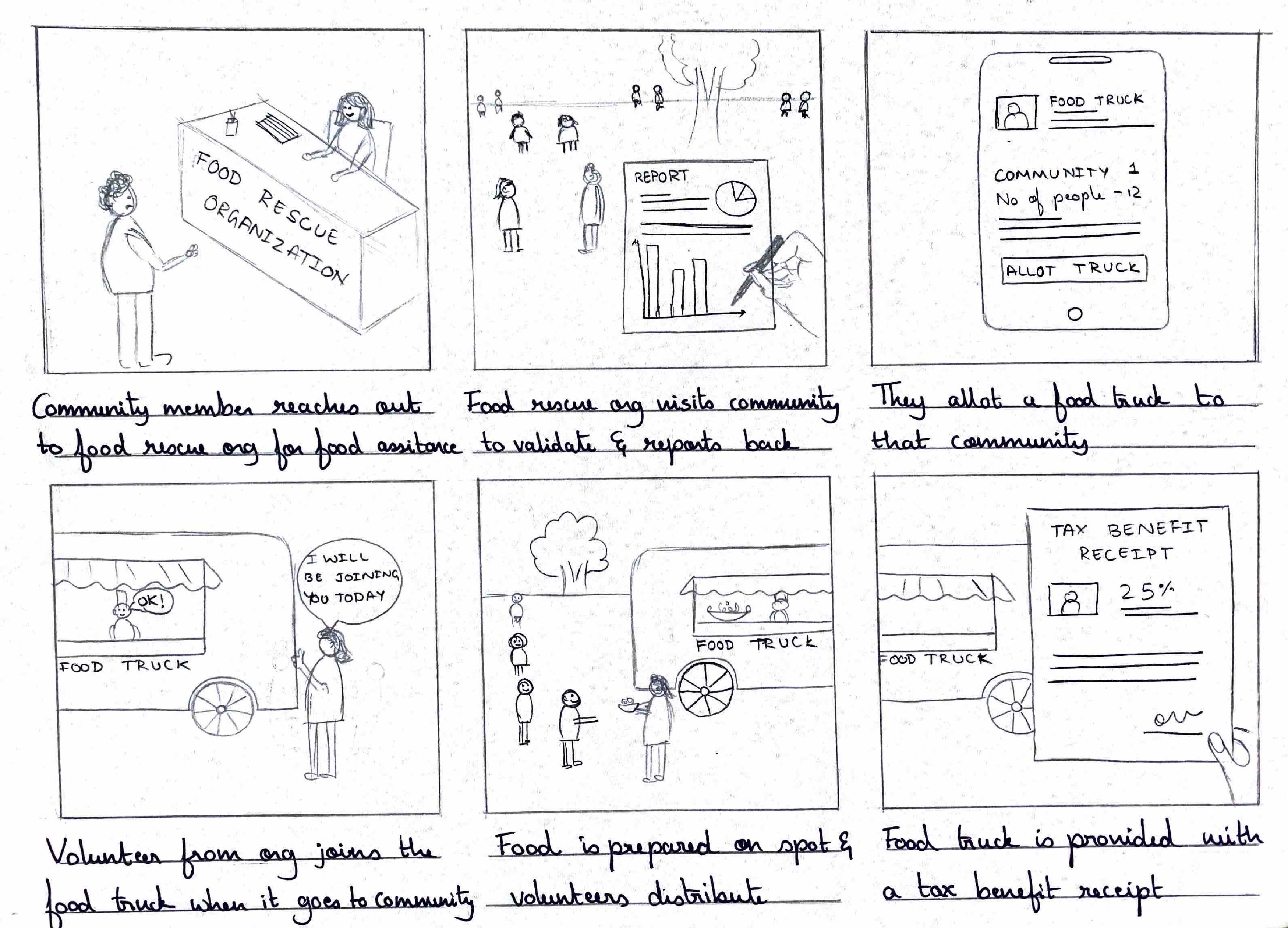
Storyboarding
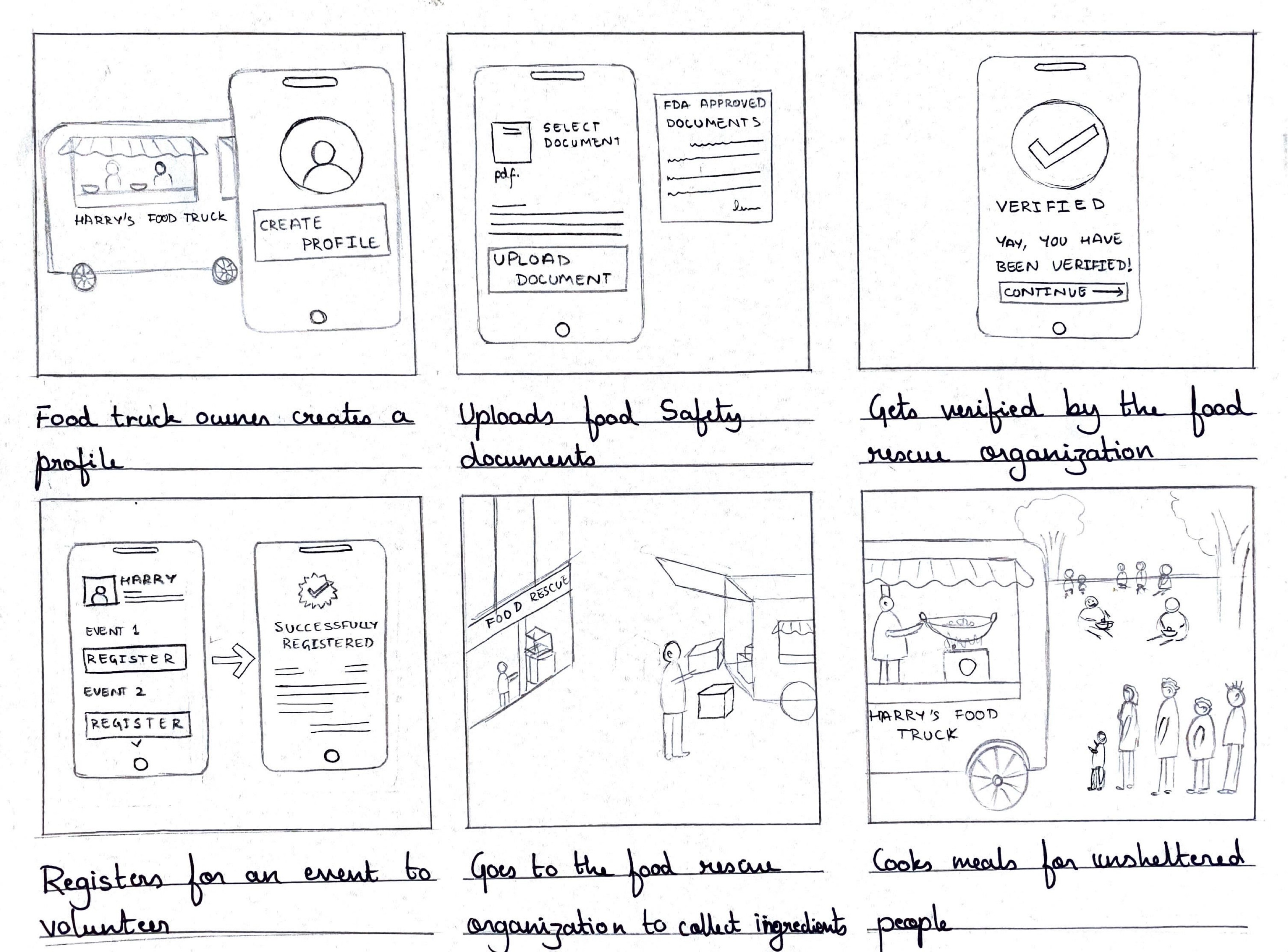
We mapped user journeys to visualize pain points and refine the donation process before prototyping. This approach ensured that our workflows were intuitive, aligned with user expectations, and minimized adoption friction.
Storyboarding
We mapped user journeys to visualize pain points and refine the donation process before prototyping. This approach ensured that our workflows were intuitive, aligned with user expectations, and minimized adoption friction.
Storyboarding
We mapped user journeys to visualize pain points and refine the donation process before prototyping. This approach ensured that our workflows were intuitive, aligned with user expectations, and minimized adoption friction.
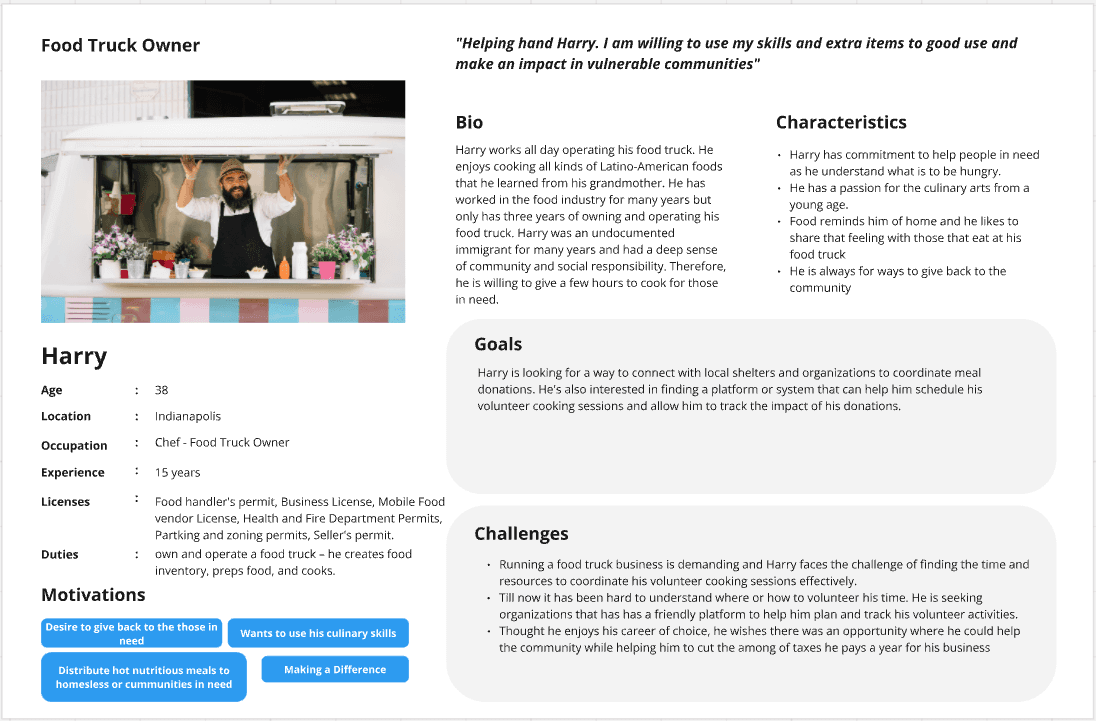
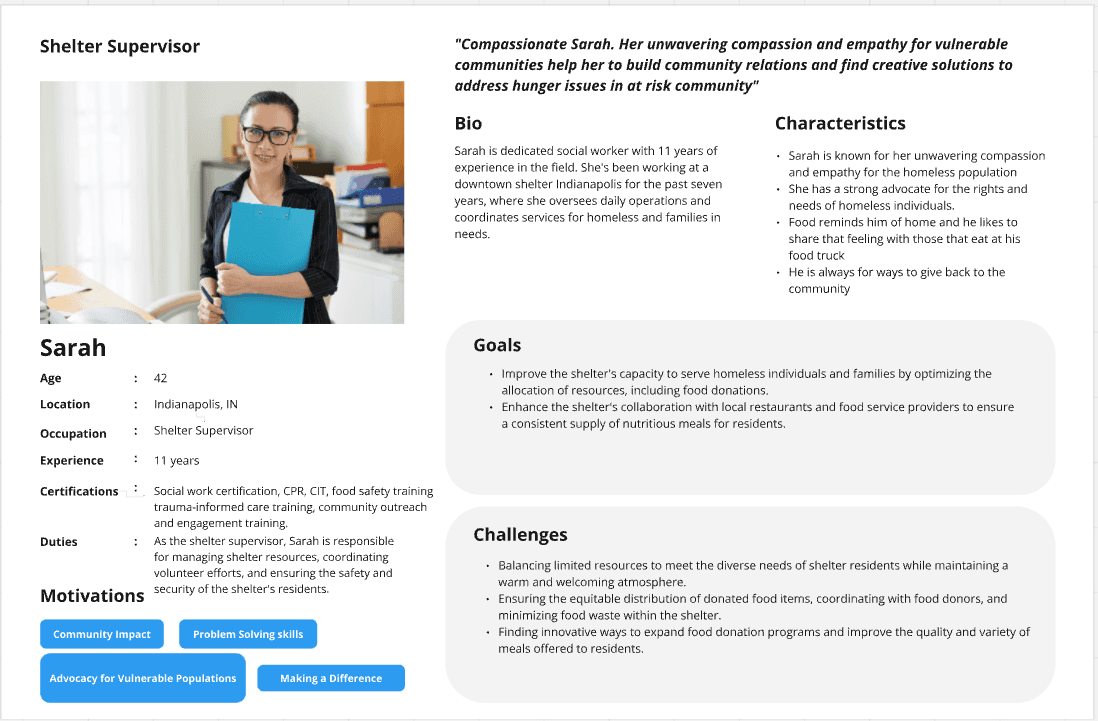
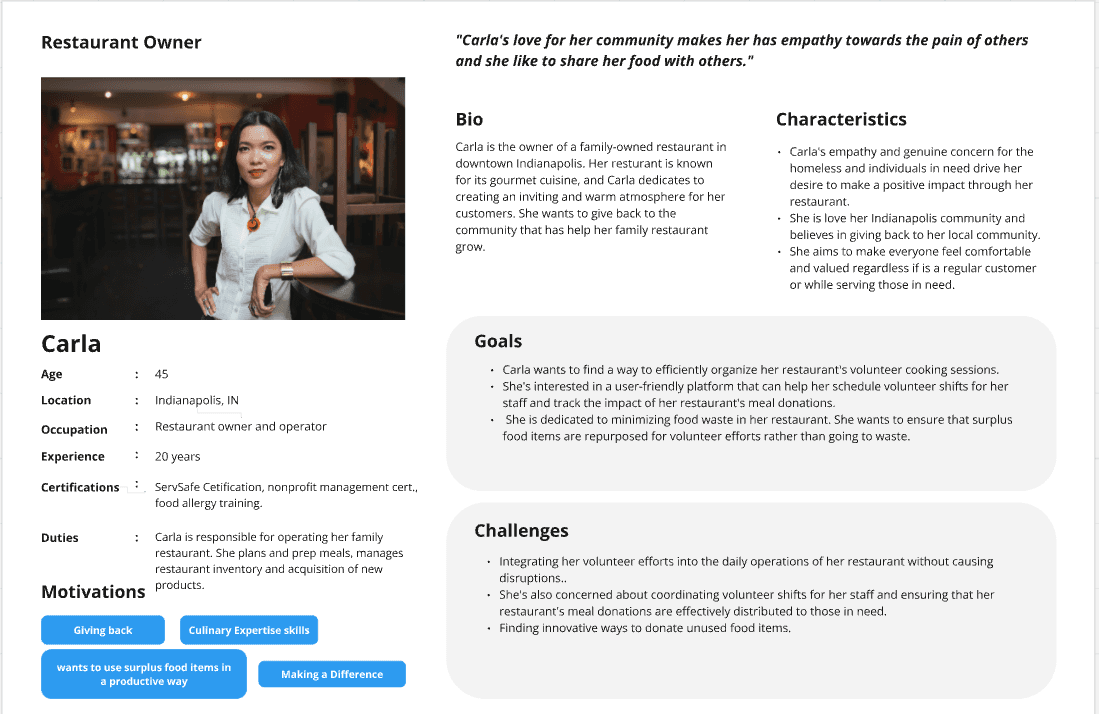
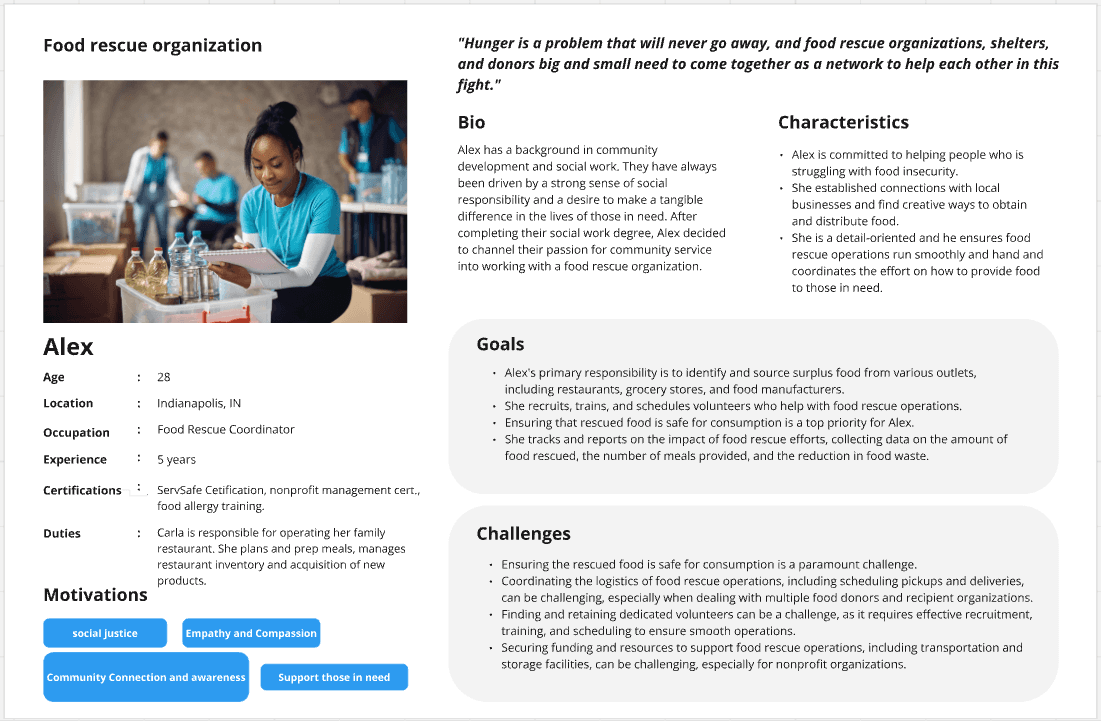
Personas
We developed user personas representing food truck chefs and rescue coordinators, ensuring our platform addressed their real-world needs. These profiles provided insights into motivations, constraints, and expectations, guiding feature prioritization and user-centric design.
Personas
We developed user personas representing food truck chefs and rescue coordinators, ensuring our platform addressed their real-world needs. These profiles provided insights into motivations, constraints, and expectations, guiding feature prioritization and user-centric design.
Personas
We developed user personas representing food truck chefs and rescue coordinators, ensuring our platform addressed their real-world needs. These profiles provided insights into motivations, constraints, and expectations, guiding feature prioritization and user-centric design.
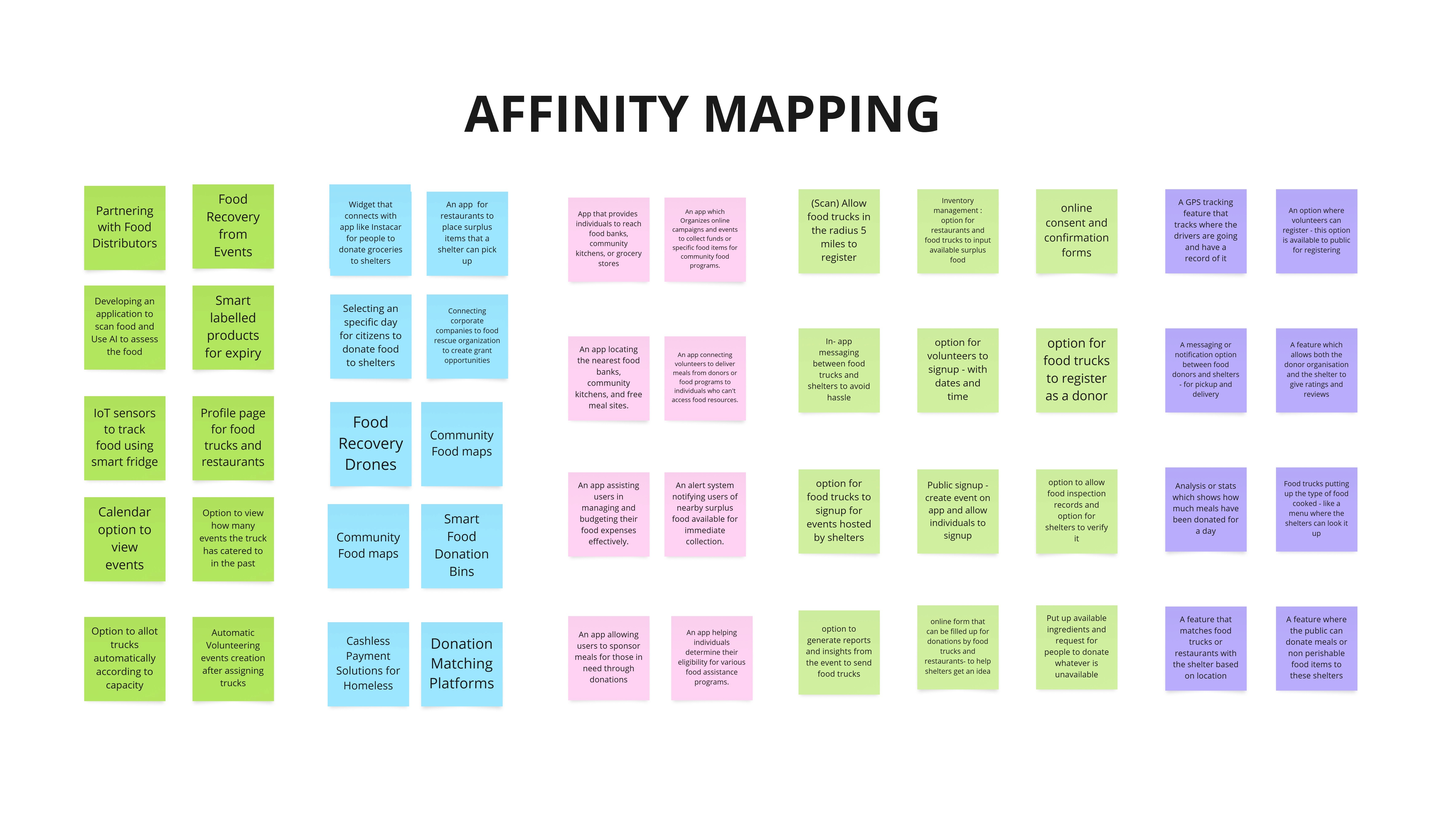
Affinity Mapping
We synthesized findings from interviews, competitor analysis, and brainstorming sessions using affinity mapping. This method helped us categorize pain points, user needs, and feature priorities, ensuring our design decisions were rooted in user-driven insights.
Affinity Mapping
We synthesized findings from interviews, competitor analysis, and brainstorming sessions using affinity mapping. This method helped us categorize pain points, user needs, and feature priorities, ensuring our design decisions were rooted in user-driven insights.
Affinity Mapping
We synthesized findings from interviews, competitor analysis, and brainstorming sessions using affinity mapping. This method helped us categorize pain points, user needs, and feature priorities, ensuring our design decisions were rooted in user-driven insights.
Research Insights
Research Insights
User Research & Insights
User Research & Insights
User Research & Insights
To better understand the specific needs of our users, we interviewed eight participants, including food truck owners, restaurant chefs, and representatives from Second Helpings. These semi-structured interviews highlighted regulatory challenges, resource shortages, and collaboration opportunities between food trucks and shelters. Insights from these interviews led to key app features, such as inventory management and event-based commitments.
To better understand the specific needs of our users, we interviewed eight participants, including food truck owners, restaurant chefs, and representatives from Second Helpings. These semi-structured interviews highlighted regulatory challenges, resource shortages, and collaboration opportunities between food trucks and shelters. Insights from these interviews led to key app features, such as inventory management and event-based commitments.
To better understand the specific needs of our users, we interviewed eight participants, including food truck owners, restaurant chefs, and representatives from Second Helpings. These semi-structured interviews highlighted regulatory challenges, resource shortages, and collaboration opportunities between food trucks and shelters. Insights from these interviews led to key app features, such as inventory management and event-based commitments.
01
Pain Points
Regulatory Barriers: Complex food safety regulations limit meal preparation and distribution.
Resource Gaps: Lack of mobile kitchens and dedicated logistics support.
Inefficient Coordination: No centralized system for matching available meals with distribution needs.
01
Pain Points
Regulatory Barriers: Complex food safety regulations limit meal preparation and distribution.
Resource Gaps: Lack of mobile kitchens and dedicated logistics support.
Inefficient Coordination: No centralized system for matching available meals with distribution needs.
01
Pain Points
Regulatory Barriers: Complex food safety regulations limit meal preparation and distribution.
Resource Gaps: Lack of mobile kitchens and dedicated logistics support.
Inefficient Coordination: No centralized system for matching available meals with distribution needs.
02
User Needs
Streamlined Event Management: Clear scheduling and collaboration tools.
Seamless Communication: Direct messaging between food trucks and coordinators.
Inventory Tracking: A system to manage available ingredients for meal prep.
02
User Needs
Streamlined Event Management: Clear scheduling and collaboration tools.
Seamless Communication: Direct messaging between food trucks and coordinators.
Inventory Tracking: A system to manage available ingredients for meal prep.
02
User Needs
Streamlined Event Management: Clear scheduling and collaboration tools.
Seamless Communication: Direct messaging between food trucks and coordinators.
Inventory Tracking: A system to manage available ingredients for meal prep.
Design and Prototyping
Design and Prototyping
Prototyping & Iteration
Prototyping & Iteration
Prototyping & Iteration
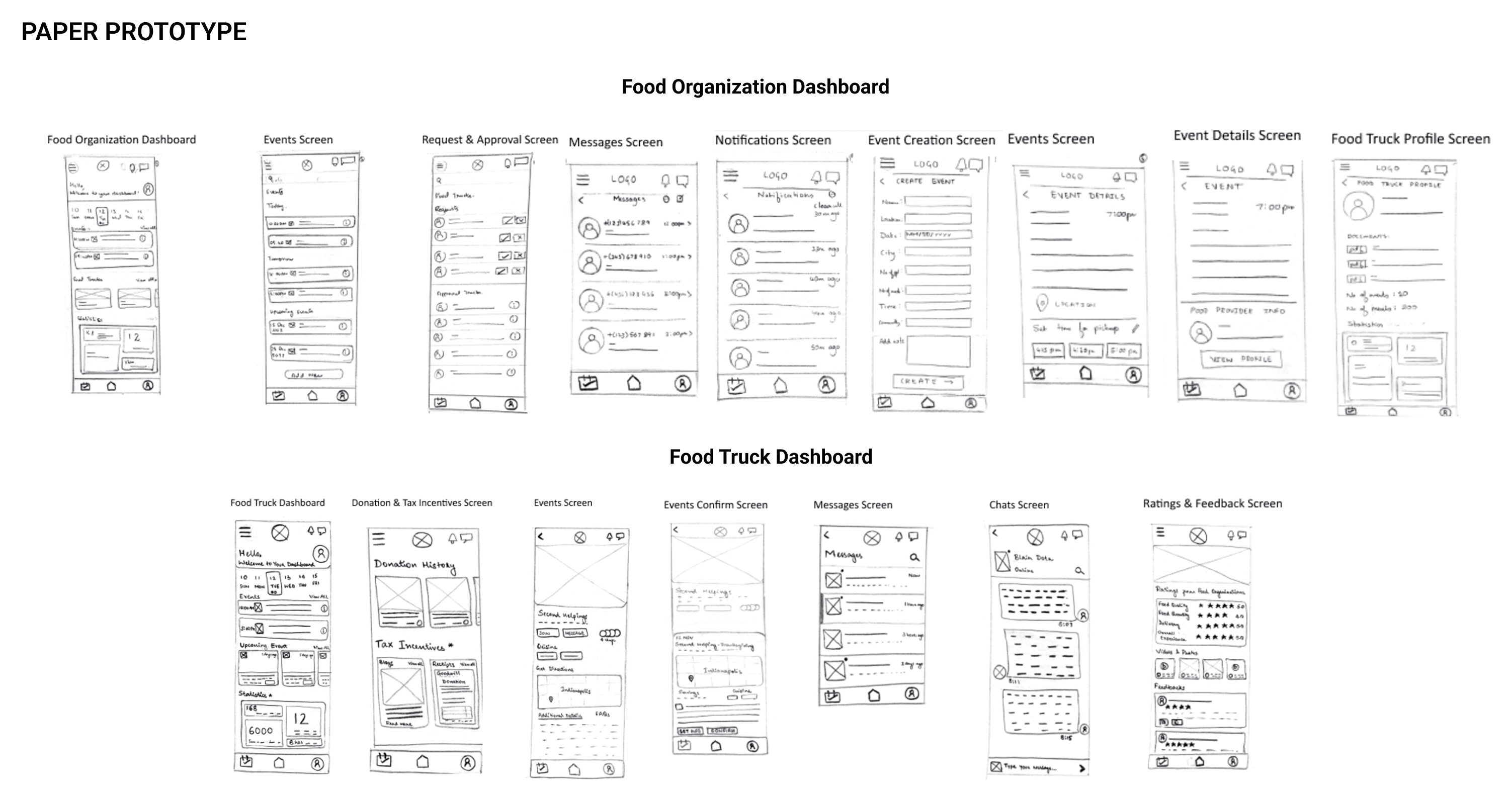
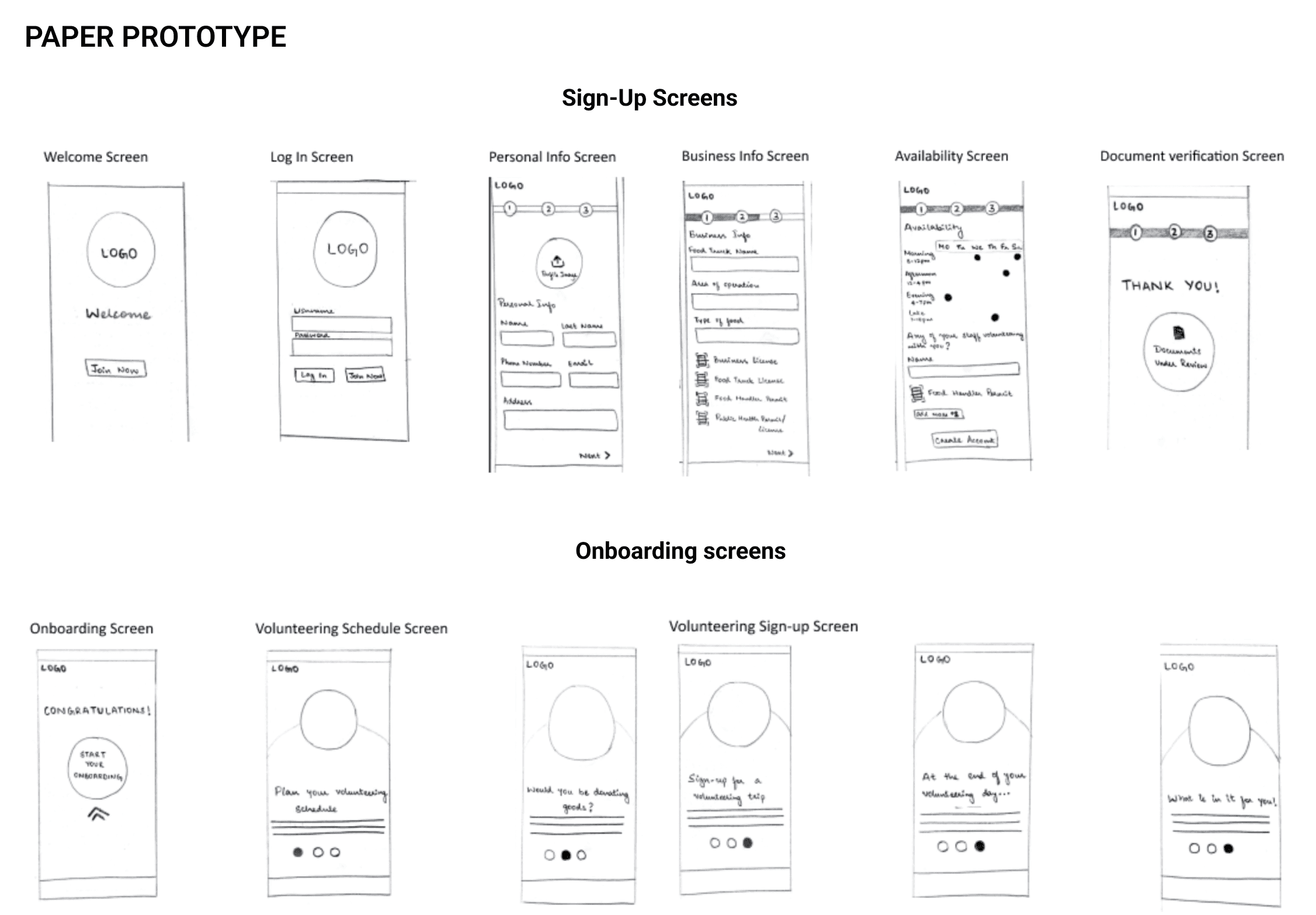
Low-Fi Wireframes
We started with rough sketches, mapping out essential user flows based on our research findings. These wireframes focused on critical interactions like event creation, ingredient selection, and chef participation.
Low-Fi Wireframes
We started with rough sketches, mapping out essential user flows based on our research findings. These wireframes focused on critical interactions like event creation, ingredient selection, and chef participation.
Low-Fi Wireframes
We started with rough sketches, mapping out essential user flows based on our research findings. These wireframes focused on critical interactions like event creation, ingredient selection, and chef participation.
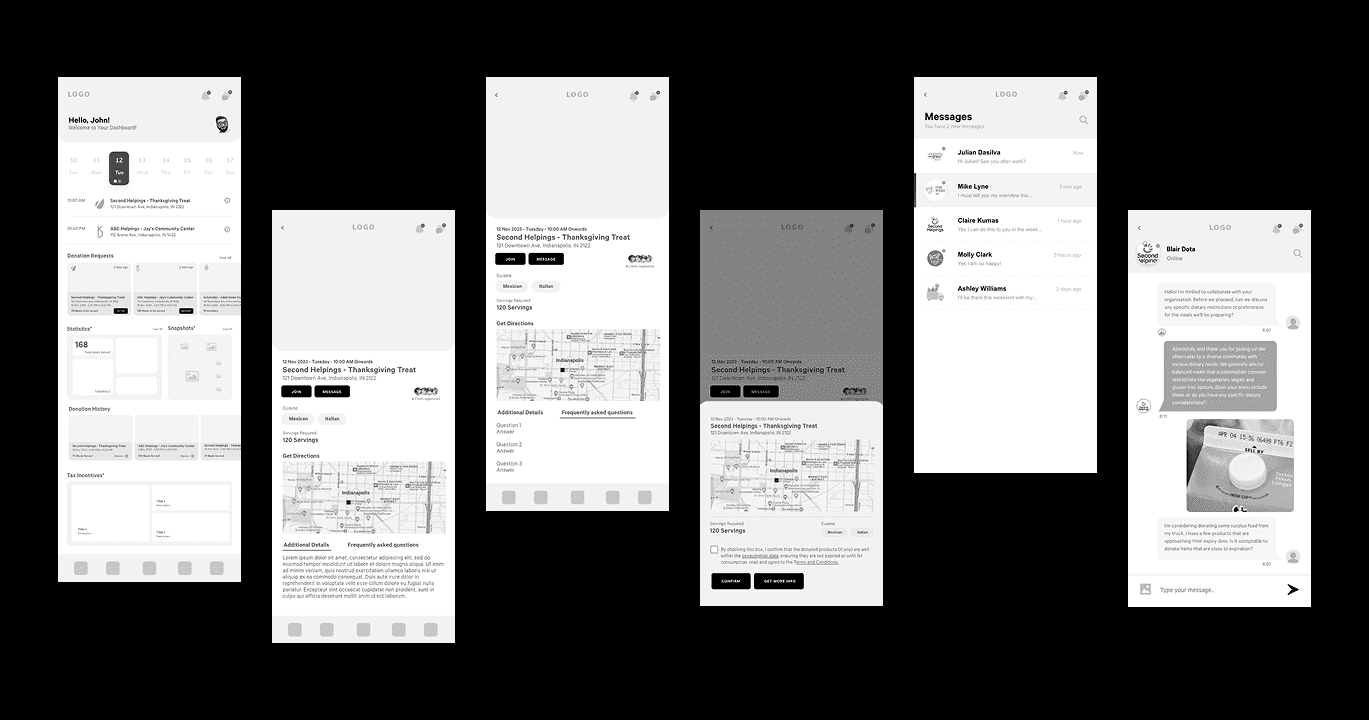
Mid-Fi Prototypes
Using insights from user feedback, we refined our wireframes into mid-fidelity prototypes, improving information hierarchy, interaction clarity, and usability before moving into high-fidelity designs.
Mid-Fi Prototypes
Using insights from user feedback, we refined our wireframes into mid-fidelity prototypes, improving information hierarchy, interaction clarity, and usability before moving into high-fidelity designs.
Mid-Fi Prototypes
Using insights from user feedback, we refined our wireframes into mid-fidelity prototypes, improving information hierarchy, interaction clarity, and usability before moving into high-fidelity designs.
Solution Overview
Solution Overview
The Design: Dual-Interface Approach
The Design: Dual-Interface Approach
The Design: Dual-Interface Approach
Chef For Grabs was designed with two interfaces within the app to cater to the distinct needs of chefs/food truck operators and food rescue organization coordinators
Interface 1
Interface 1
Food Rescue Organization Interface
Food Rescue Organization Interface
Event Creation and Management
Organizations can post events, specify meal requirements, set dietary preferences, and share logistical details such as event location and time.
Inventory Management
Food rescue coordinators can track and update ingredient lists for each event, ensuring chefs have the latest information for planning.
Communication Tools
Facilitates communication with chefs and provides feedback on the completion of events.
Interface 2
Interface 2
Chef/Food Truck Interface
Chef/Food Truck Interface
Event Browsing and Participation
Chefs can view upcoming events, select events that match their availability, and confirm participation.
Ingredient Selection and Menu Planning
They can browse available ingredients provided by food rescue organizations, plan a menu accordingly, and make any necessary ingredient requests.
Reminders and Notifications
Receive timely notifications for event reminders, ingredient availability, and commitment confirmations.
Impact & Scalability
Impact & Scalability
Business Impact & Implementation
Efficiency
Scalability
Market Position
Outcomes
Business Value
Automated Event Coordination & Reduced Food Waste
50% Reduction in Planning Time
The platform streamlines scheduling, ingredient tracking, and communication, reducing manual coordination between food rescue organizations and chefs.
Up to 30% Fewer Missed Deliveries
By matching available meals with real-time distribution needs, the app minimizes spoilage and optimizes food utilization.
Efficiency
Scalability
Market Position
Outcomes
Business Value
Automated Event Coordination & Reduced Food Waste
50% Reduction in Planning Time
The platform streamlines scheduling, ingredient tracking, and communication, reducing manual coordination between food rescue organizations and chefs.
Up to 30% Fewer Missed Deliveries
By matching available meals with real-time distribution needs, the app minimizes spoilage and optimizes food utilization.
Efficiency
Scalability
Market Position
Outcomes
Business Value
Automated Event Coordination & Reduced Food Waste
50% Reduction in Planning Time
The platform streamlines scheduling, ingredient tracking, and communication, reducing manual coordination between food rescue organizations and chefs.
Up to 30% Fewer Missed Deliveries
By matching available meals with real-time distribution needs, the app minimizes spoilage and optimizes food utilization.

User Testing & Feature Validation
User Testing & Feature Validation
Understanding What Worked
Understanding What Worked
Understanding What Worked
We conducted usability testing sessions with chefs and food rescue coordinators to gather feedback on the platform’s effectiveness. These sessions helped us refine the app’s functionality, ensuring it met real-world needs.
We conducted usability testing sessions with chefs and food rescue coordinators to gather feedback on the platform’s effectiveness. These sessions helped us refine the app’s functionality, ensuring it met real-world needs.
We conducted usability testing sessions with chefs and food rescue coordinators to gather feedback on the platform’s effectiveness. These sessions helped us refine the app’s functionality, ensuring it met real-world needs.
Seamless event coordination
Real-time chef matching
Automated documentation
Ingredient inventory management
Integrated messaging system
Seamless event coordination
Real-time chef matching
Automated documentation
Ingredient inventory management
Integrated messaging system
Outcomes and Learnings
Outcomes and Learnings
Reflection & Key learnings
Reflection & Key learnings
Reflection & Key learnings
Adapting Solutions to Real Constraints
Our initial concept was broad, but user feedback helped us narrow our focus to essential features that could be realistically implemented and scaled.
Adapting Solutions to Real Constraints
Our initial concept was broad, but user feedback helped us narrow our focus to essential features that could be realistically implemented and scaled.
Adapting Solutions to Real Constraints
Our initial concept was broad, but user feedback helped us narrow our focus to essential features that could be realistically implemented and scaled.
Leveraging Team Collaboration
Aligning on shared goals and balancing diverse perspectives helped us navigate challenges efficiently, reinforcing the importance of clear communication and iterative design.
Leveraging Team Collaboration
Aligning on shared goals and balancing diverse perspectives helped us navigate challenges efficiently, reinforcing the importance of clear communication and iterative design.
Leveraging Team Collaboration
Aligning on shared goals and balancing diverse perspectives helped us navigate challenges efficiently, reinforcing the importance of clear communication and iterative design.
Addressing Implementation Challenges
Regulatory compliance and logistical feasibility required continuous iteration. Understanding real-world constraints allowed us to create a practical, actionable solution.
Addressing Implementation Challenges
Regulatory compliance and logistical feasibility required continuous iteration. Understanding real-world constraints allowed us to create a practical, actionable solution.
Addressing Implementation Challenges
Regulatory compliance and logistical feasibility required continuous iteration. Understanding real-world constraints allowed us to create a practical, actionable solution.
Designing for Long-Term Adoption
Beyond initial implementation, ensuring sustained user engagement required building a system that was not only functional but also intuitive, adaptable, and rewarding for all stakeholders involved.
Designing for Long-Term Adoption
Beyond initial implementation, ensuring sustained user engagement required building a system that was not only functional but also intuitive, adaptable, and rewarding for all stakeholders involved.
Designing for Long-Term Adoption
Beyond initial implementation, ensuring sustained user engagement required building a system that was not only functional but also intuitive, adaptable, and rewarding for all stakeholders involved.
Conclusion
Conclusion
Final Thoughts
Final Thoughts
Final Thoughts
Chef For Grabs demonstrates how human-centered design can address real-world challenges. By leveraging user research and iterative design, we created a solution that enhances food distribution efficiency and fosters collaboration between food trucks and nonprofits. Moving forward, this project has the potential to scale beyond Indianapolis, expanding its impact to other food-insecure communities.